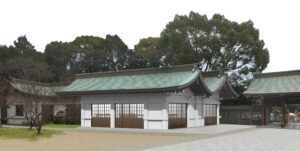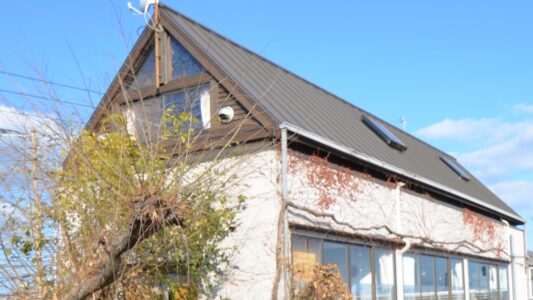
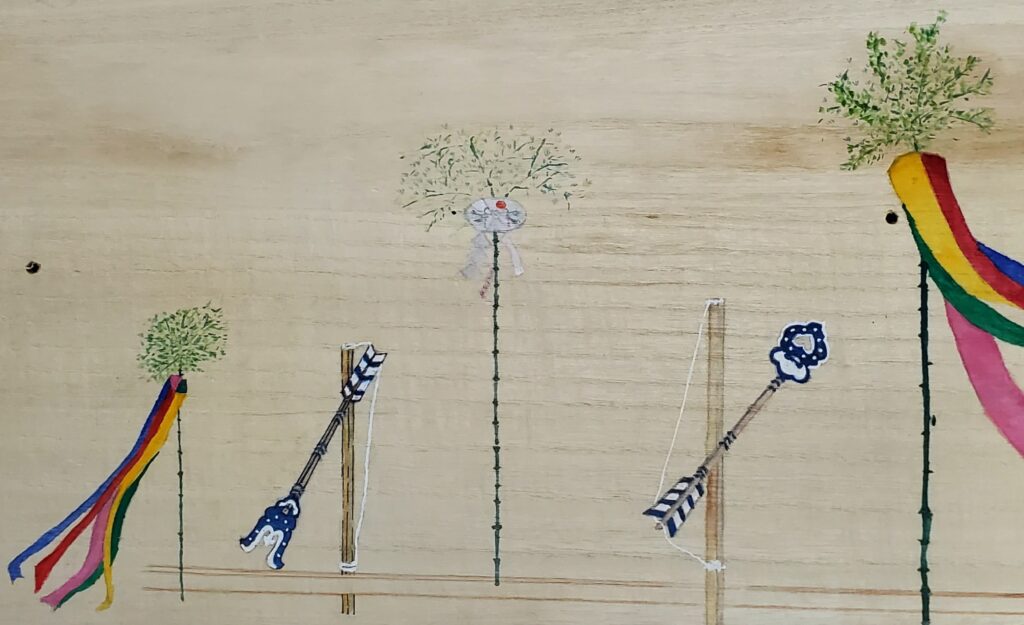
照今殿の棟上げの様子。
小学生の頃は、近所で棟上げがあると聞くと家に飛んで帰っていました。
台所のストック置場から頑丈そうで大きな買い物袋を選んで家建ての場所に行き、何やらの儀式はそっちのけでお餅まきの時間をひたすらに待った記憶があります。
人も沢山集まったので、お餅は押し合い圧し合いの争奪戦でした。大人も子供も関係なく皆、真剣にお餅を拾うので、隣の大人より先に「お餅」を拾えたりすると、子供心に何となく優越感が沸いたものでした。 普段は怒られてばかりだけど、大人と本気で勝負してもよい「餅まき」は小さなお祭り行事で楽しかった思い出があります。
今ではとても珍しくなりましたが、この”ハレ”のご加護が皆様にも届きますように。
★What Is a “Jōtō-shiki” (上棟式)?
Jōtō-shiki, also known as a “roof-raising ceremony” or “framework completion ritual,” is a traditional Japanese event held during the construction of a building—usually a house—when the main wooden framework is completed and the highest beam (called the “ridge beam”) is placed.
It’s a moment to celebrate progress, express gratitude to the carpenters, and pray for the safety of the construction going forward.
★What Happens During the Ceremony?
While practices vary by region and builder, a typical Jōtō-shiki includes:
- Purification Rituals: Sake (rice wine), salt, and sometimes rice are sprinkled at the four corners of the building to purify the site and ward off bad spirits.
- Prayers for Safety: The homeowner and builders offer prayers for continued safety and success.
- Offerings to the Gods: A small altar may be set up with offerings like fruits, vegetables, and sake.
- Mochi Throwing (餅まき): In some regions, rice cakes or sweets are thrown from the roof to people gathered below—a festive way to share good fortune with the community.